
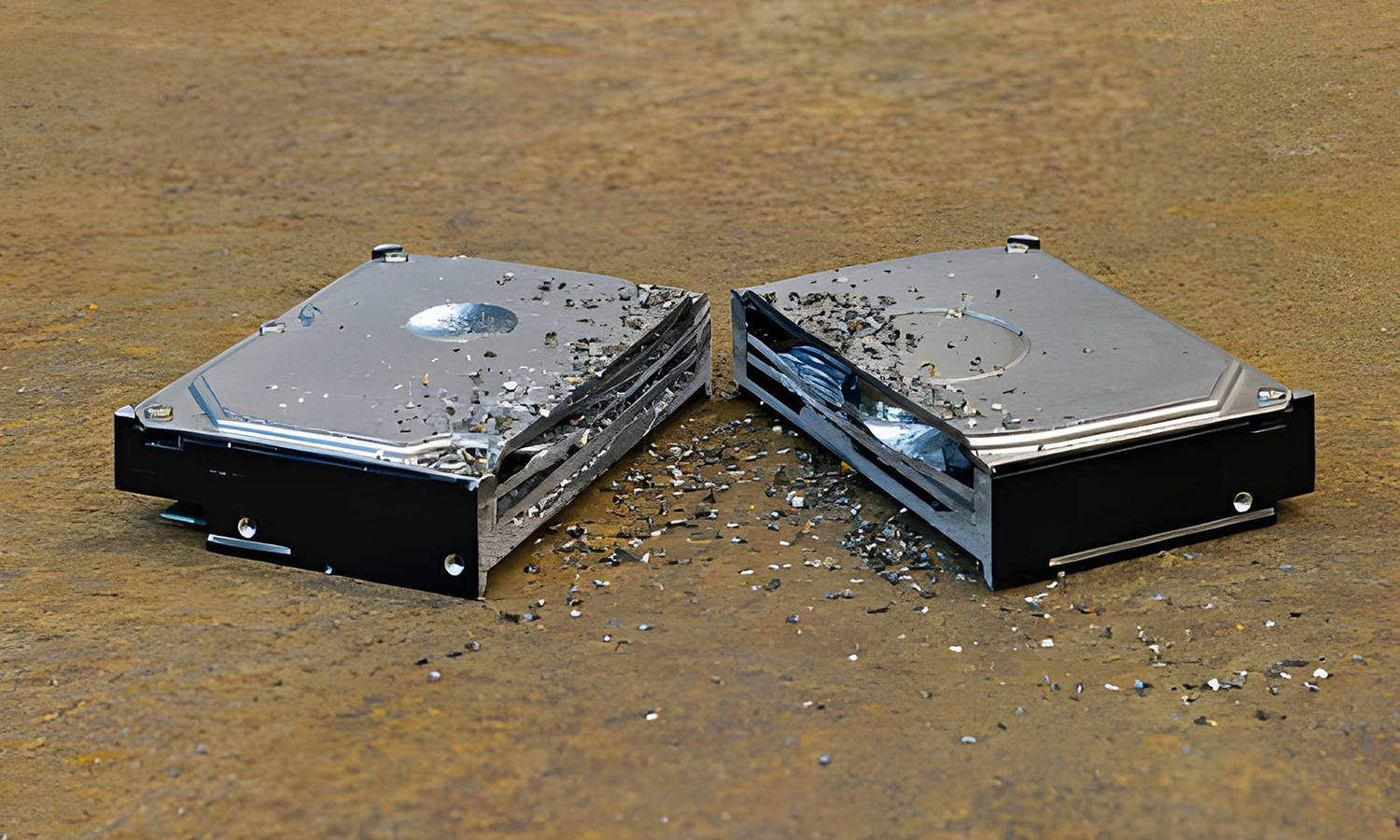
For businesses, the right choice for onsite or offsite data destruction depends on factors like data sensitivity, storage volume, media type, security requirements, and the level of oversight required.
When organizations retire their equipment, resetting devices is not enough to guarantee that sensitive data is removed. IBM’s 2025 Cost of a Data Breach Report reveals the global average cost of a data breach reached $4.44 million. Irresponsible management of data-bearing devices can lead to exposure of customer records, financial information, and confidential business files. Therefore, the importance of data destruction is non-negotiable.
Data can be destroyed using two approaches: Onsite and offsite data destruction.
In this blog, we’ll compare the two approaches and share insights into which method is best suited to different business needs. But first, let’s understand the basics:
What Is Onsite and Offsite Data Destruction?
Onsite data destruction means the service provider’s team visits your facility to perform the process at your premises. This approach is useful for sectors like healthcare and banking when businesses require direct oversight and want to minimize the movement of sensitive data. Your team can observe the process in real time.
For offsite data destruction, equipment is transported to the ITAD’s service provider, where the data destruction process takes place. Before transportation, prepare an inventory and chain-of-custody documentation to support asset-level tracking. The facilities are equipped with surveillance and restricted access to prevent loss, theft, or misplacement.
| Criteria | Onsite Data Destruction | Offsite Data Destruction |
| Data Security Level | Highest (data stays onsite) | High (transit risk applicable) |
| Chain of Custody | In complete control of the company | Depends on vendor tracking |
| Ideal For | Regulated sectors dealing with sensitive data | Bulk data disposal, moderate to low data sensitivity |
| Cost | Higher due to labor cost | Lower for bulk devices |
| Bulk Erasure | Not feasible | Better suited for large volumes |
| Regulatory Compliance | Erasure logs and certificates | Certificates and destruction records |
Onsite Vs. Offsite Data Destruction: A Detailed Comparison
Both approaches differ in terms of process, security and data exposure, cost, equipment volume, and verification and documentation.
Data Destruction Process
Onsite Data Destruction
The provider first evaluates equipment against the asset inventory to confirm which devices need to be sanitized. Then they choose the appropriate sanitization method based on the storage media and security requirements. After the data is sanitized or physically destroyed, the provider records the result, identifying any asset that couldn’t be processed. During the process, your team may observe the work.
In the end, the data destruction company provides asset-level reports and certificates of destruction, where applicable, to document the completed work.
Offsite Data Destruction
The process begins with transportation. The provider collects the IT equipment, records the assets, and secures them for transportation. Upon equipment arrival, the staff compares the arrived equipment with the collection records to spot any missing assets. The devices are sanitized using the agreed method. The provider records the result and documents assets that couldn’t be processed.
Finally, the business receives reports and applicable certificates of destruction to reconcile the processed assets with its original inventory.
IBM’s 2025 Cost of a Data Breach Report reveals the global average cost of a data breach reached $4.44 million.
Security and Data Exposure
Onsite Data Destruction
Onsite destruction reduces the time sensitive equipment spends outside the company. It allows businesses to monitor the process directly, making it a suitable option for organizations handling confidential customer records, financial information, or regulated data.
Offsite Data Destruction
Offsite data destruction is equally secure if the provider follows proper protocols like facility protection, restricted area access, secure storage, and clear procedures for handling equipment. Businesses should also check how the provider tracks shipments and maintains records while equipment is in transit.
Cost Factor
Onsite Data Destruction
Onsite service may involve technician travel, mobile destruction equipment, setup, and additional charges for work at multiple locations. This adds up to the final cost.
Offsite Data Destruction
Offsite services can be economical for larger volumes because providers use centralized facilities and specialized equipment. However, the final cost can be impacted due to transportation, packaging, and handling. Therefore, businesses should compare on-site and off-site costs before making any decision.
Equipment Volume
Onsite Data Destruction
Onsite destruction can be a practical solution when the number of selected devices is relatively low. It allows organizations to destroy a small batch of assets at their own premises without arranging transportation to an external facility.
Offsite Data Destruction
Offsite destruction is better suited for large batches of equipment, as providers can process equipment using specialized machinery at dedicated facilities. Centralized services are also suitable for businesses retiring assets across multiple locations.
Verification and Documentation
Onsite Data Destruction
It is easier for businesses to track the process and coordinate verification with their internal security teams. They can agree on the evidence required to demonstrate that the service meets company policies and verify that the provider’s reporting meets their audit needs.
Offsite Data Destruction
For offsite data destruction, businesses rely on the provider’s reporting and verification controls. Businesses and the service provider should establish what evidence will be provided. Documentation should mention the assets covered and the outcome of the service. A collection receipt alone cannot prove successful data destruction.
How to Choose the Right Option for Your Business?
The decision depends on the following four questions:
- What type of data was stored on the devices?
- What does your policy require?
- How many devices need to be processed?
- How quickly must data destruction be completed?
Onsite data destruction is the justified choice for smaller loads and time-sensitive data. This approach remains the gold standard for eliminating transit risk and achieving immediate chain-of-custody closure.
Offsite destruction is the winning choice for high-volume commodity hardware refreshes. Specialized facilities use industrial equipment designed for different storage media, including SSDs. This option also supports logistical scalability necessary to support complex global operations.
In either option, the final documentation requirement stays constant.
The Hybrid Approach
Most enterprises pick the hybrid approach to route assets based on data sensitivity and disposition path. Businesses can leverage onsite services for high-risk assets and offsite services for high-volume endpoints. This helps them optimize their procurement budgets, champion sustainability, and shield their most critical corporate data.
Which Sectors Lean Which Way?
Heavily regulated organizations tend to favor witnessed destruction due to critical data-bearing assets, while businesses refreshing large fleets value offsite processing.
Onsite Destruction
- Healthcare
- Banking and financial services
- Legal services
- Government and public sector
- Defense and security
Offsite Destruction
- Retail
- Hospitality
- Corporate offices
- Education
- IT and data centers
- Manufacturing
Compliance Requirements and Data Destruction Standards
NIST SP 800-88 Rev. 2 provides guidelines for media sanitization. Businesses should comply with recognized standards and applicable laws when destroying data. Here are a few things firms should take care of.
Follow NIST Media Sanitization Guidelines
Businesses can choose a suitable media sanitization method using SP 800-88 Rev. 2 guidelines. The right method selection comes down to factors like device type, data sensitivity, and the risk of unauthorized access. The selected method should meet the firm’s security requirements and account for how the device will be used afterward.
Keep Records and Verify Results
Whether destruction takes place onsite or offsite, companies should keep records of assets processed, the destruction method used, and the outcomes.
For offsite destruction, businesses should maintain records of asset transfers and chain of custody during transportation and processing.
These records verify that each device was handled according to the agreed requirements.
Identify the Applicable Legal Requirements
Businesses should identify NIST requirements according to their specific industry. For example, government agencies may have different requirements for protecting sensitive data. Companies should determine which federal, state, industry-specific, and contractual requirements apply to their operations.
Learn More: NIST 800-88 Data Sanitization: A Practical Guide for Businesses
Conclusion
Selecting between onsite and offsite data destruction is not just about convenience; rather, it is more about data protection while meeting your business needs. Onsite destruction offers immediate security by keeping equipment within the premises. Offsite services can be cost-efficient and scalable. However, both approaches share the same purpose, i.e., secure asset sanitization.
Frequently Asked Questions
What should a business do if a storage device cannot be wiped?
An organization must keep it secure to prevent unauthorized access. Depending on the device and security requirements, it may attempt sanitization again. The failure and corrective action should be documented.
What is the difference between a Certificate of Destruction and Chain of Custody?
A Certificate of Destruction is presented when an asset has been successfully destroyed. Chain of custody is a document that tracks an asset’s custody and transfer during the process, to identify the accountable authority at each step.
How should a business verify that the service provider is trustworthy?
Here’s how a business can evaluate a service provider:
- Review the provider’s security procedures and employee access controls
- Check transportation security and asset-tracking practices
- Ask how the provider sanitizes media and verifies the results
- Review relevant certifications, audit evidence, and service agreements
- Confirm how failed processing, missing assets, and discrepancies are handled
- Ensure the provider supplies detailed records, rather than relying on a certificate alone
Can data be recovered after a hard drive is destroyed?
Proper physical destruction can make data recovery impossible. But if only the external casing is damaged, storage components may be left intact. Therefore, businesses should choose a destruction method according to media type and required security level.